
One of the most common questions we hear from graduates is: "Which VLSI domain should I choose?" The honest answer is that there's no single best track. There's the track that best fits your strengths and interests. Here's how the main ones compare.
- Graduate
- 01FundamentalsLogic, CMOS
- 02HDL codingVerilog, VHDL
- 03Pick a track6 tracks
- Front-end / RTL designRTL Design Engineer
- Design verificationDV Engineer
- Physical designPD & STA Engineer
- Analog & mixed-signalAnalog Design Engineer
- FPGAFPGA Engineer
- Packaging & 3D ICPackaging Engineer
- 04Real projectsRISC-V, UVM
- 05Tools & prepLinux, TCL
- Job-ready
Front-end / RTL design
RTL designers turn specifications into hardware. You'll think about micro-architecture, write Verilog or SystemVerilog, and work closely with synthesis and timing.
- Good fit if: you enjoy digital logic, architecture and building things from scratch.
- Learn: Verilog/SystemVerilog, FSMs, synthesis, CDC, SDC constraints.
Design verification
Verification engineers make sure the design works before it becomes silicon, which is critical because a silicon bug can cost millions. It is the largest hiring segment in the industry.
- Good fit if: you like programming, problem-solving and breaking things.
- Learn: SystemVerilog OOP, UVM, assertions, coverage, bus protocols.
Physical design
Physical design engineers take the netlist and turn it into a manufacturable layout, balancing timing, power and area on real silicon.
- Good fit if: you enjoy optimisation, analysis and seeing the physical chip take shape.
- Learn: floorplanning, placement, CTS, routing, STA, TCL scripting.
Analog & mixed-signal
Analog engineers design the circuits that connect chips to the real world, including amplifiers, PLLs and data converters. It demands strong circuit fundamentals but rewards deep expertise.
Packaging & 3D IC
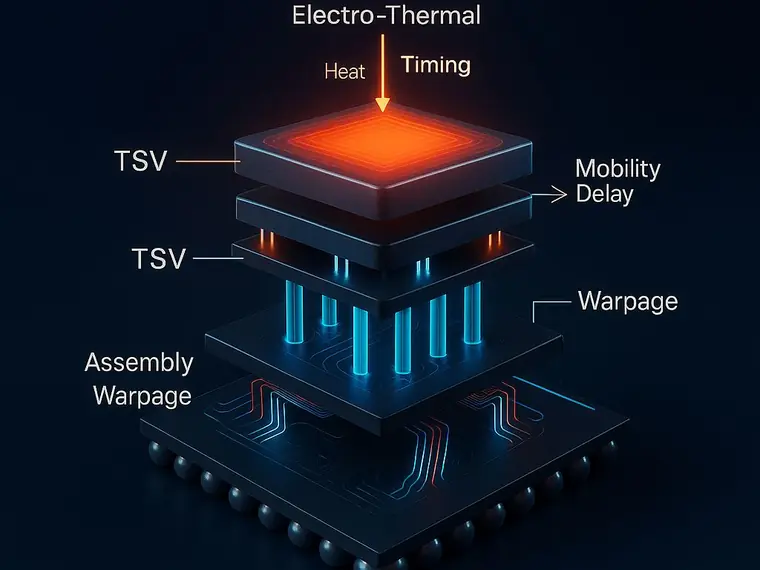
With chiplets and 3D integration becoming mainstream, packaging has become a design discipline of its own, and one of the fastest-growing.
Our advice: whatever you choose, build rock-solid digital fundamentals and a hardware language first. Then go deep in one track and back it up with real projects you can explain in detail.
See the full VLSI career roadmap, or talk to us for personal guidance.